FRENCH SAINT-MARTIN
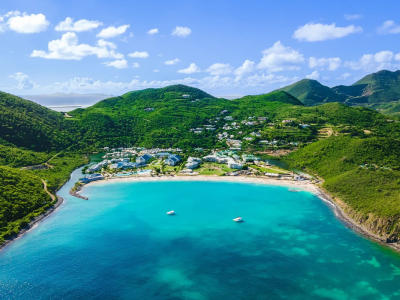
Located in the northern part of the island, the French overseas collectivity of Saint-Martin has a total surface area of approximately 54km².
The inhabitants are known as Saint Martiners.
Most of the island’s built-up areas are situated in its low-lying zones along the coast. The capital city is Marigot, where the “Hôtel de la collectivité”, prefecture and most of the collectivity’s administrative buildings and services are located. Other towns and districts include Grand Case, Colombier, Cul-de-Sac, Quartier d’Orléans, Nettle Bay and Terres Basses.
DUTCH SINT-MAARTEN
The Dutch part of the island, Sint-Maarten, covers a total surface area of around 34km². The inhabitants are known as Sint Maartiners. Located in the southern section of the island, St. Maarten was part of the Netherlands Antilles, a group of five islands that included Bonaire, Curaçao, Saba, Statia and St. Maarten.
On October 10th 2010 Sint Maarten became a country within the Dutch Kingdom.
Sint Maarten’s capital is Philipsburg, where the Parliament and most administrative buildings and services can be found. Other towns include Simpson Bay, Madame Estate, Cul de Sac, Dutch Quarter, Cole Bay, Oyster Pond, South Reward, St Peters, Pointe Blanche, Middle Region, Cay Hill, Upper Prince’s Quarter and Lower Prince’s Quarter. Sint Maarten’s built-up areas are mainly concentrated in low-lying zones along the coast, but are starting to spread into the hilly areas inland.
Did you know? There is no physical border between the French and Dutch territories and people and goods can travel freely between the two parts of the island.
THE CLIMATE IS IDEAL ALL YEAR ROUND ON ST. MARTIN
Like the other islands in the Caribbean, Saint-Martin has a tropical climate.
The average annual temperature is 80.6°F, peaking at around 89.6°F. Temperatures rarely dip below 68°F. The temperature on St. Martin is stable and benefits from the trade winds. There is no rainy season as such and the showers are rather short.
In spite of the stable temperature on the island, there are two seasons : the dry season from December to April, and the wintering season from May to November.
The dry season corresponds to the high tourist season. At this time of year, mornings and nights are cooler but never dip below an average of 68°F. In the wintering season, temperatures are higher throughout the day.
Although there is seasonal variation in the rains on St. Martin, the difference between the dry and the rainy seasons is less marked than on islands located further south, such as Guadeloupe and Martinique. The rainy season is generally associated with the hurricane season, which runs from June to December.
Throughout the year the sun rises between 5 am and 6 am and sets between 5 pm and 7 pm. The longest days are between April and September.
The best time to visit St. Martin and St. Maarten is May and June or between November and mid-December. These select weeks are times when hotels advertise their best rates. The island’s weather is pleasant year-round, but these are times when rain showers are less likely.