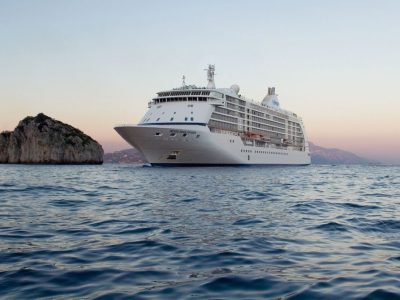
Discover adventure on your luxury tour of Croatia amid the pine forests, salt water lakes, and vineyards of Mljet Island; the hidden grottos of Vis Island; and the coves of Elaphiti. Then delve into Croatia’s unique culinary scene with tastings at the premiere vineyards, gourmet moonlit dinners abroad private boats, and foraging expeditions in the countryside. Finally, tour Croatia’s rich history through monasteries, palaces, villages, synagogues, and cathedrals.

Highlighted Experiences:
- Wander the countryside in pursuit of world-class truffles with an expert truffle hunter and his truffle-sniffing hound.
- Discover the breath-taking scenery of the Pakleni Island Archipelago and Montenegro on a private cruise.
- Unravel Croatia’s past as you walk the streets of Split, Hvar, Korcula, and Dubrovnik with a local historian.
Croatia occupies the largest part of the eastern coast of the Adriatic Sea which, as a part of the Mediterranean Sea, penetrates deepest into European soil. Croatia’s shoreline and numerous islands enjoy the majority of the Adriatic coastline. The narrow Dinara Mountain Range separates the country’s Mediterranean region from its central European continental part, which spans from the easterly edges of the Alps in the North-West to the shores of the Danube in the East, encompassing the southern part of the fertile Pannonian lowlands.
Croatia can be classified as a Pannonian-Adriatic country due to its south-eastern European and Mediterranean position.The surface area of Croatia totals 15178.92 ft, which is made up of 42446.61 ft of the mainland (65%) and a coastline – both internal and territorial seas – of 18635.84 ft (35%).
The majority of Croatian mountains belong to the Dinaric Alps (which extend from the border of Slovenia to Montenegro). The Dinaric mountain range in Croatia is famous worldwide for being a classical example of deep karst. Although there are mountains in Croatia, it is the only country in the South-Eastern Europe without a peak above 6561 ft.
The Croatian coast is located between the Dinaric Alps to the east and the Adriatic Sea to the west and has 1,100 miles (1,800 km) of coastline. One of the striking characteristics of the Croatian coast is that it has a total of 1,244 islands, islets, rocks and reefs.
Magical Hvar Island
Outside of Dubrovnik, Hvar is the epicentre of the Dalmatian travel industry. Holidaymakers come to be around the yachts lining the harbour of the island’s namesake capital and among the revellers forking out more than top dollar (in Croatian terms) to party into the night. A massive overhaul of key hotels here, in the Suncani Hvar chain, has been followed by a slower stage of development as the town comes to terms with its stardom.
Croatia Food And Wine
The northern and southern areas of the Adriatic are characterized by differences in taste and preparation of more Mediterranean foods. The tradition of grilling and roasting fish and delicacies of the sea has been carried down by generations. In the north of Croatia however, Austro-Hungarian culinary influences are more evident. Croatia is also renowned for its good wines, produced both in the continental and coastal regions of the country.
Fish
In the coastal regions of Croatia the cuisine has a rather Mediterranean flavor, with lots of olive oil used in the preparation. However, Croatian cuisine does have its own distinct identity, especially in regards to the cooking of fish. The tradition of grilling and roasting fish and delicacies of the sea has been carried down from generation to generation, where the taste of the fish depends on the grilling technique and the type of wood chosen. All along the coast and the isles, the fish menus are unrivaled – even the humble sardine will never taste quite so delicious. Many Croatian fish restaurants have their own fishing boats, so visitors can be assured of the freshness of the fish.
Meat
Grilled pork and roasted lamb are common Croatian dishes, as is beef, which is often cooked in a delicious tomato sauce. Regional differences in Croatian cuisine are quite evident and in the north of Croatia Austro-Hungarian culinary influences are strongest – one finds meats cooked in bread crumbs and goulashes served with stuffed cabbage. The dish called sarma, consisting of minced meat, rice, onion and spices rolled in cabbage leaf, is a popular dish which is also common to many countries in the region that were under Ottoman influence. In the region around Zagreb, are the specialty is štrukli (thin sheets of cheese cooked in water). In Slavonia, the specialty is kobasice (pork sausages) as well as kulen, which is similar to salami.
Cheese
Paški sir, a hard cheese from the isle of Pag, is an excellent cheese and one of the most reputed in Croatia. The traditional Croatian fresh cheese (svježi sir) is also very popular, often sold at markets in plastic sacs and usually eaten as an accompaniment to a salad, with salt and pepper.
Sweet foods
Croatian slastiarne (pâtisseriesor sweet shops) offer a range of sweet foods with many different influences: cream cakes of Austrian inspiration, nut cakes of Eastern influence, kremšnite (vanilla and custard cream cakes), rožata egg cakes, savijae strudels, cream cakes or rich Dalmatian tarts.
Croatian Wine
The cultivation of grapevines and the production of wine has been a Croatian tradition for centuries, both in the continental and coastal part of Croatia.
The most renowned wines from the Croatian coast and islands include red wines such as Teran, Merlot, Kabernet, Opolo, Plavac, Dinga and Postup, or white wines such as Malvazija, Pošip, Pinot, Kujundžuša, Žlahtina and Muškat.
From the continental of Croatia, white wines such as the Rizling, Graševina, Burgundac and Traminac wines are the most renowned.
Spirits
Brandies (rakije) are the most famous Croatian spirits and among the wide range of brandies available the following can be highlighted: šljivovica (plum brandy), travarica (herb brandy) and lozova (grape brandy).