General information
Costa Rica is located in Central America, connecting North and South America. It borders Nicaragua to the north and Panama to the south. Because of its location, warm weather predominates, but many different microclimates are found throughout the country. According to the National Statistics and Census Institute, Costa Rica has a population of approximately 4,890,379, of which 2,467,829 are men and 2,422,551 are women.
The country is divided into seven provinces (San José, its capital, Alajuela, Cartago, Heredia, Puntarenas, Guanacaste, and Limón), 81 cantons, and 463 districts. It stretches across 51,100 square kilometers, which is the size of the country. It is a democratic, free, and independent Republic. Most of the population professes the Catholic religion and enjoys the freedom of religion. Its currency is the colón, and its official language is Spanish.
One of the most important and recognized characteristics of the country was the abolition of its army on Dec. 1, 1948, by former President José Figueres Ferrer. On that date, peace became one of the main principles of Costa Rica, differentiating it from other Central American countries that utilize the military as a method of defense.
‘Geography
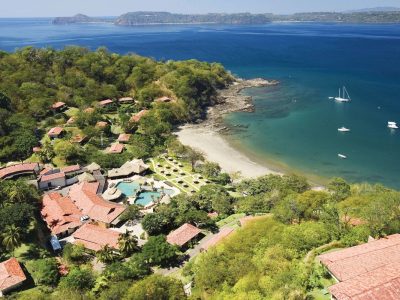
Rugged highlands are found throughout most of the country, ranging from approximately 1,000 to 2,000 meters (3,000 to 6,000 feet above sea level). The Guanacaste Mountain Range, Central Mountain Range, and Talamanca Mountain Range are the main mountain ranges extending the entire length of the country. There are several active volcanoes (Arenal Volcano, Irazu Volcano, Rincon de la Vieja Volcano, and Turrialba Volcano), and the country’s highest mountain (Chirripo Hill) with a height of 3,819 m/12,530 ft. The country has a relatively long coastline in both the Atlantic and Pacific oceans, as well as several rivers and streams that attract specialist kayakers and rafters from all over the world.
Climate
Costa Rica is a tropical destination. Its look and landscape change throughout the year, and the country is in a constant state of renewal. As such, every time of the year is a great time to visit Costa Rica. Tailor your trip to your interests, and your experience in Costa Rica will be fulfilling beyond imagination.
The Costa Rican landscape is one of great variety, filled with lush vegetation and stunning displays of flora. With jungles, beaches, and a wide array of terrain and climate zones, Costa Rica is a playground for the adventurous. Whether it’s rafting, hiking, wildlife viewing or just relaxing on the beach, everything under the sun is available to you.
No matter the season or region, there is always something exciting to discover or uncover. The rewards are endless for those willing to go o the beaten path in Costa Rica.
Wellness in Costa Rica
If you are looking for the ideal place to improve your mental and physical well-being, adopt healthy habits and activities into your lifestyle, liberate your soul, and return like a new person, then Costa Rica could be your next travel destination.
Costa Rica is ideal for detoxification from stress and the daily grind. You can experience Wellness tourism as part of a lifestyle that combines physical activity and healthy eating while enjoying a wide range of activities to renew your mind, body, and soul.
Wellness includes activities that put you in contact with nature: Trekking (low-difficulty walks), Forest baths (breathing in the fresh air of the forest), Earthing (barefoot walks on the earth/sand), high-quality healthy food, a combination of spa and lunch (lunch) and consumption of local products in a natural setting.
In Costa Rica, you can also experience innovative relaxation techniques such as body wraps, in which volcanic mud, coffee, tropical fruits, and chocolate are used to moisturize your skin; hydrotherapy and hot springs are another way to harness the water resources of our country for personal renewal by letting positive energy flow throughout the body.
These wellness features, typical of Costa Rica, have helped create one of the planet’s blue zones or longevity areas. A 2004 study by the University of Costa Rica found that mortality among Costa Ricans of 90 years of age is 10% lower in the Nicoya Peninsula, south of Guanacaste. The calcium-rich water of this area, healthy eating, family living, and the “pura vida” lifestyle are secrets to longevity.
This is a unique lifestyle that is experienced only in Costa Rica, whose essence is Wellness