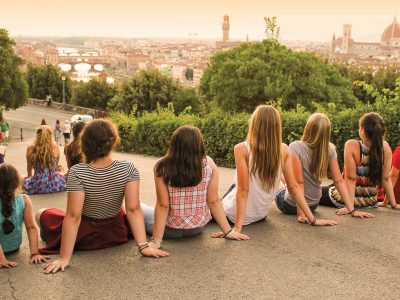
The city is spaciously laid out with large garden suburbs, wide avenues, and streets. The center of Santiago, which has preserved the original Spanish colonial pattern, is a mixture of older buildings, some dating from the eighteenth century, and modern skyscrapers. Greater Santiago and its surroundings are Chile’s main industrial center, with approximately 60 percent of the country’s industrial plants and 56 percent of the industrial workforce.
Puerto Natales
With a population of just over 20,000, Puerto Natales comes alive during the warmer months. The town is situated on the banks of the Señoret Channel and has easy access to the area’s impressive ice fields, the Pacific Ocean, and many national and local parks and museums.
The town wasn’t colonized until 1893 due to resistance by the native Tehuelche. When it was officially incorporated in 1911, the local slaughterhouse quickly gave rise to one of the world’s primary beef exporting industries. Today, the town mainly survives on fishing, farming, raising livestock, and tourism.
Relatively close to Puerto Natales lies the Parque Nacional Torres del Paine. Known to many as the finest national park in South America, Torres del Plaine is a mere 90 miles from town and well worth the trip. Outdoorsy types may also enjoy a venture to the Parque Nacional Bernardo O’Higgins to see the Balmaceda and Serrano glaciers. Even within Puerto Natales, nature abounds. Along the road Costanera Pedro Montt, it’s not uncommon to see black-necked swans, flamingos, and other animal species along the shore.
San Pedro de Atacama
Welcome to San Pedro de Atacama—an oasis in the heart of the driest desert in the world. The Atacama is so dry that certain parts of the area have never recorded precipitation. It’s here where the altiplano and the Atacama unite to form a unique climate and culture. The earliest settlers to this region came around 11,000 years ago and used their resources to farm as much of the arid land as possible. Today, San Pedro is a bustling town of 2,500 people and a well-established economy. Because of its many interesting sites, it is one of Chile’s most popular destinations.
The town offers much in terms of peace, as well as some impressive surroundings. A stroll around the main parts of the city will take an afternoon, where you can visit the town church, and the mummies at the Gustavo Le Paige Museum, or go shopping for handicrafts on the street of San Pedro. Another “must-see” when visiting the Atacama is the Valley of the Moon. This odd place is located in the Cordillera de la Sal and features eerie landscapes molded for thousands of years by the dry winds.
Travelers should also make a point to see the El Tatio Geysers, located in the Los Andes Cordillera. This is the world’s highest geyser field, and people can bring a bathing suit and towel and enjoy the natural hot springs. San Pedro is also home to Chile’s largest salt flat and a huge breeding ground for colorful flamingos.
Torres del Paine
The Torres del Paine National Park is located in Chile’s Region XII, between the massif of the Los Andes Mountain Range and the Patagonian steppes, in Ultima Esperanza Province, a community of Torres del Paine. The National Park covers 181,000 hectares. It has roads for vehicles and paths for walkers. It has 3 entry gates, one administrative center, and seven guard posts in various sectors of the Park.
The Park’s hotels offer comfort and services to enjoy an unforgettable stay and daily tours and expeditions to the national park’s major points of interest.
Another option is to take a Trekking, Horseback, Climbing, or Mountaineering circuit. In this case, you will have to stay in various refuges, which are becoming increasingly more comfortable and are conveniently located inside the Park.
The Torres del Paine National Park and environs have four types of vegetation – pre-Andean scrubland on the banks of rivers and lakes; Magallanes forest made up of species of the Nothofagus genus; Magallanes tundra, typified by the presence of bent-over bushes, cushions of plants and pasture lands; and high altitude vegetation above the forests, which disappears as the altitude increases.